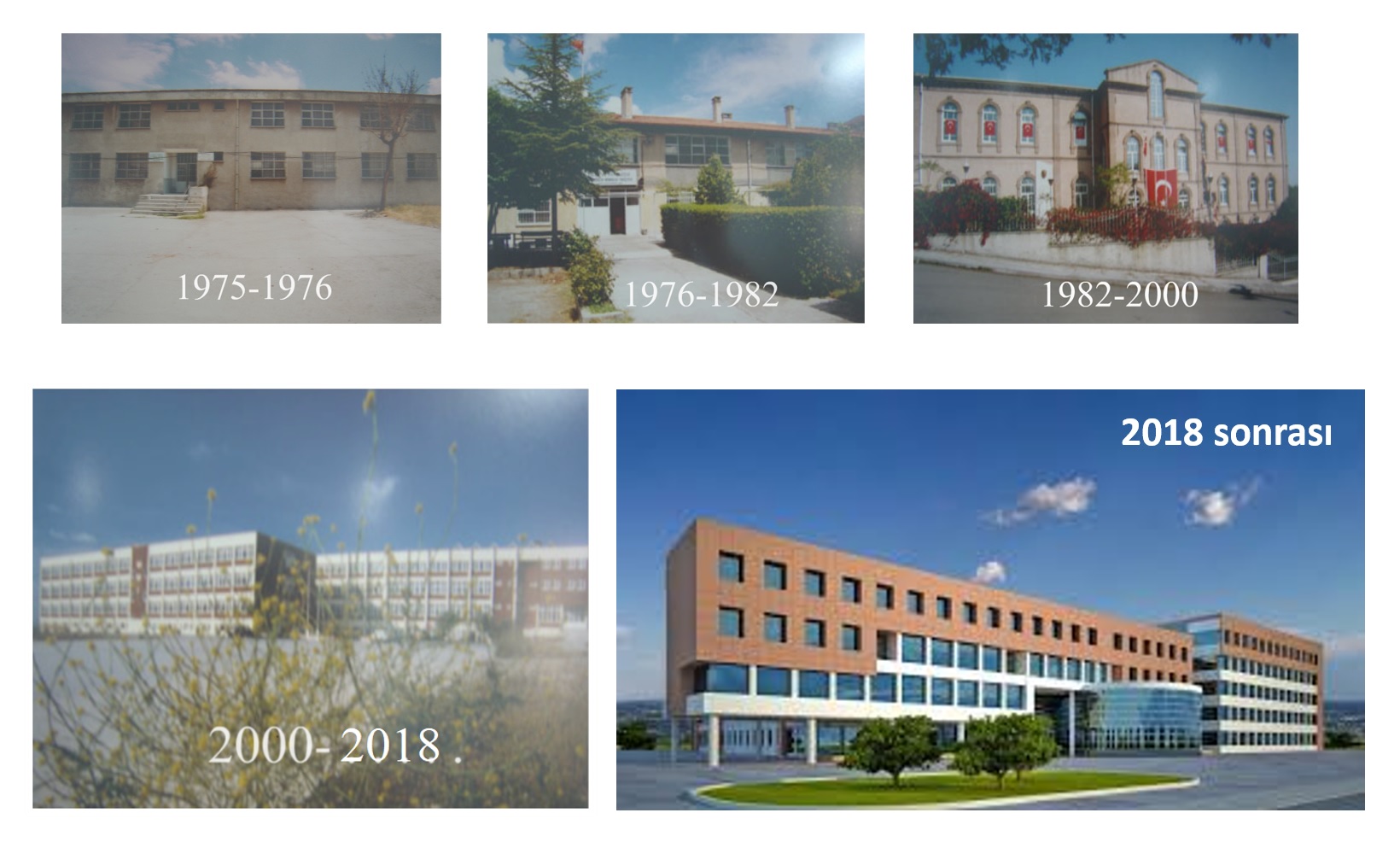
Balıkesir University was established on July 11, 1992, with Law No. 3837 published in the Official Gazette No. 21281. The Faculty of Engineering is one of the faculties established with the university, and the origins of the Mechanical Engineering Department within it date back to the 1976-1977 academic year.
The Department of Mechanical Engineering was one of the first departments, along with Civil Engineering, to be opened within the Balıkesir State Academy of Engineering and Architecture, established by Law No. 1418. The department operated within the academy until 1982. Following this date, the academies were merged into universities under Law No. 2547 on Higher Education and Law No. 2809 on the Organization of Higher Education Institutions, and subsequently, it continued its education under the umbrella of Uludağ University Balıkesir Faculty of Engineering. With the establishment of Balıkesir University in 1992, the Department of Mechanical Engineering became one of the most established and important departments within the Faculty of Engineering.
The department began its educational activities under the leadership of Academy President Prof. Mehmet Çakır during its founding. Throughout this period, it has continued to develop with the contributions of academics from numerous cities, including Istanbul, Bursa, Eskişehir, and Izmir. We extend our gratitude to all faculty members who have contributed to our department and to those who have passed away.
The Department of Mechanical Engineering switched to a dual-program program, daytime and evening, starting in the 1991-1992 academic year. This provided more students with access to education, and the same curriculum was applied in both programs. However, the evening program was discontinued as of the 2023-2024 academic year.
In addition to theoretical courses, our students have the opportunity to consolidate their professional knowledge and develop practical skills through a total of 60 workdays of internships in laboratory practices, general workshops, assembly, operations, and organization. This allows our graduates to become engineers who contribute to industry, increase production efficiency, improve workplace organization, and rapidly implement technological innovations.
Our department's faculty members and research assistants provide guidance not only to undergraduate education but also to graduate and doctoral studies; they also contribute to universal knowledge through scientific research by following technological developments.